
Preclinical Research: The Foundation of Successful Drug Development
Preclinical research is the cornerstone of drug development, providing essential insights before a drug reaches human trials. It is the stage where safety, efficacy, and the biological behavior of drug candidates are rigorously tested, laying the groundwork for success in later phases. Contract Research Organizations (CROs) play a pivotal role in this phase, offering specialized expertise in conducting studies that ensure the safety and effectiveness of potential therapies.
The Importance of Preclinical Research
Preclinical research addresses a critical question: is the drug safe enough to test in humans? This phase encompasses extensive laboratory experiments to evaluate a drug’s toxicology, pharmacokinetics, and pharmacodynamics. These studies allow researchers to identify any potential risks, ensuring that only safe and promising drug candidates advance to clinical research. By providing a thorough understanding of the drug’s behavior in biological systems, preclinical research minimizes the likelihood of costly failures in later stages.
In Vitro Studies: Early Screening and Mechanistic Insights
In vitro studies are conducted using cell cultures and biochemical assays to screen a drug’s activity and toxicity at the cellular level. These studies allow researchers to observe the drug’s direct effects on target cells, evaluate its interaction with disease pathways, and gather critical data on drug metabolism and toxicity.
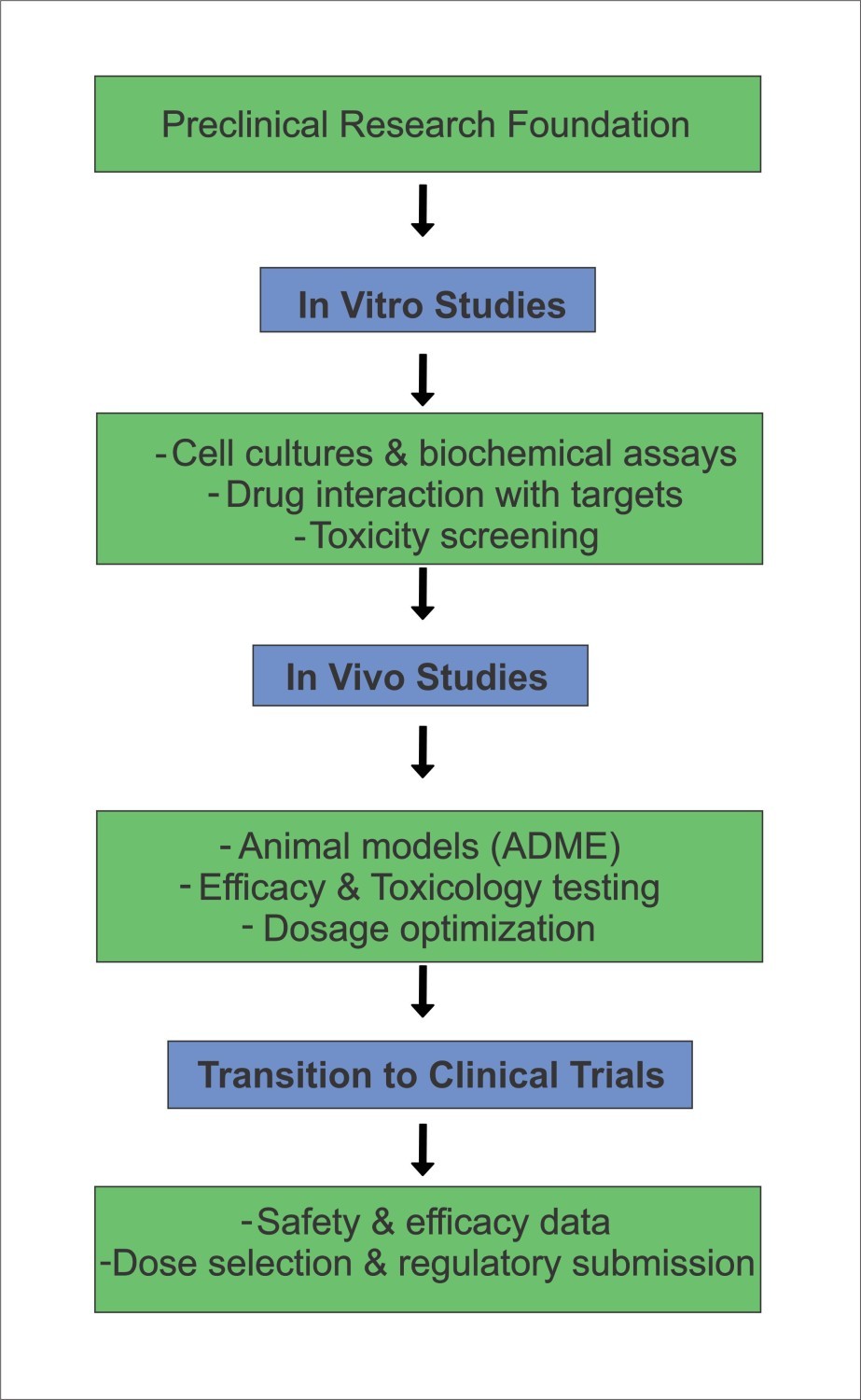
For example, cytotoxicity assays help determine the drug’s potential to cause cellular damage, while receptor-binding studies evaluate its ability to target specific molecules involved in disease. In vitro testing is often the first step, offering a controlled environment to test various concentrations of a drug candidate and observe its effects before moving to more complex biological systems.
In Vivo Studies: Testing in Biological Systems
Once in vitro studies show promise, in vivo studies are conducted in animal models to observe how the drug interacts with a complete living organism. These studies provide valuable data on drug absorption, distribution, metabolism, and excretion (ADME) and allow researchers to assess the overall biological response, including side effects and long-term safety. In vivo testing is crucial in determining the optimal dosage and understanding potential off-target effects that may not be evident in in vitro studies.
For example, toxicology studies in animals help identify any harmful effects a drug may have on vital organs such as the liver, kidneys, or heart. Efficacy studies in disease models evaluate whether the drug produces the desired therapeutic effects. Together, these studies provide a comprehensive understanding of the drug’s potential success in clinical research.
Building the Bridge to Clinical Trials
The insights gained from preclinical research are instrumental in determining the right dosage, drug formulation, and method of delivery for clinical testing. By offering detailed data on safety and efficacy, preclinical studies reduce the risk of failure during human trials and increase the likelihood of regulatory approval.
CROs play a crucial role in conducting these studies with precision and efficiency, ensuring that pharmaceutical companies can move forward with confidence. Preclinical research, therefore, serves as the foundation for successful drug development, driving scientific innovation from the lab to potential therapeutic solutions for patients.
Preclinical research is where science meets safety, and through meticulous in vitro and in vivo studies, CROs help pave the way for successful drug development that benefits patients globally.